
The data center boom has a permission problem

By Eric Eve
January 20, 2026
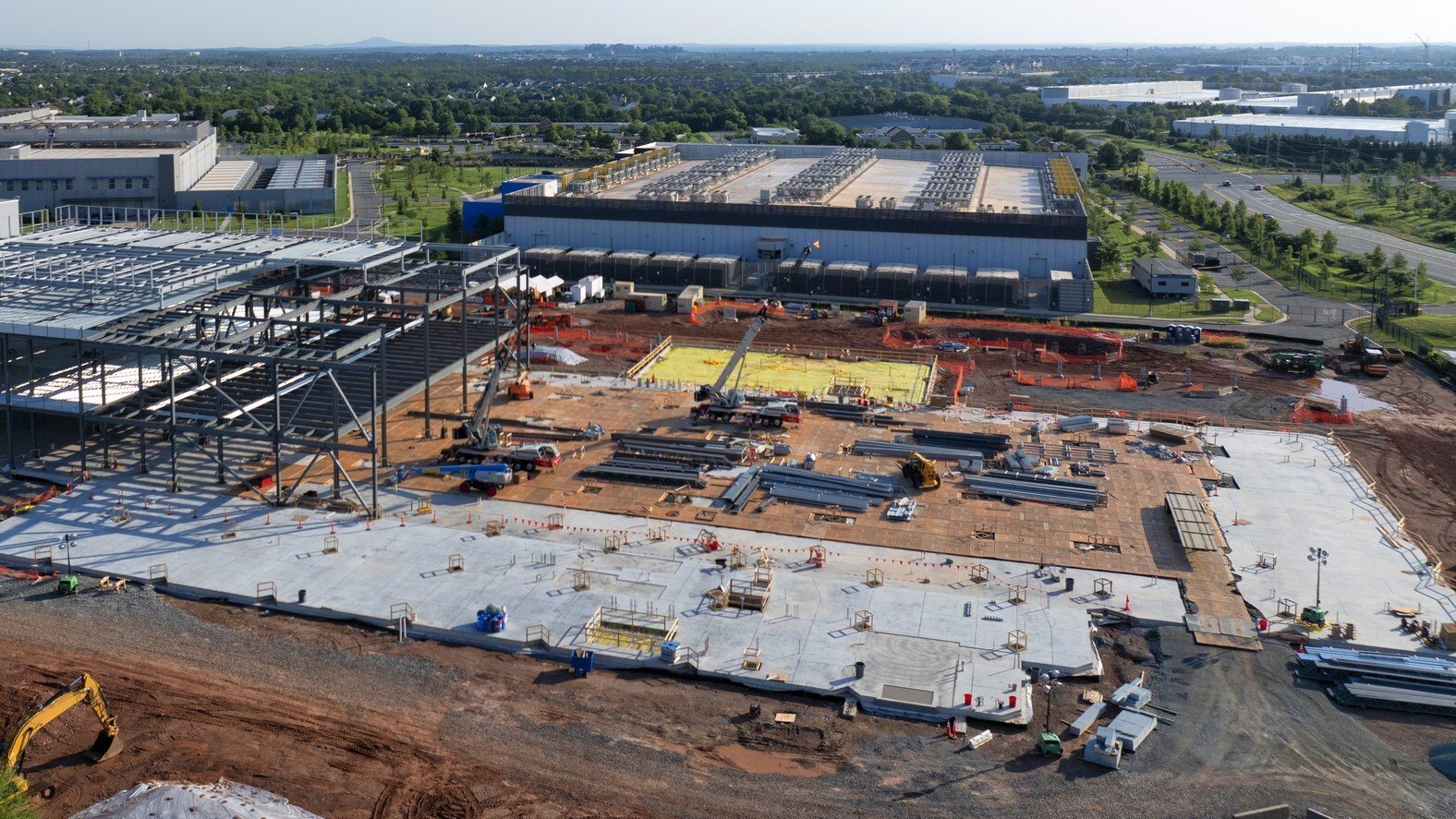
The potential of artificial intelligence in America faces a growing problem — but it’s not regulation, foreign competition, or any of the other issues you’ve heard about.
It’s permission.
Local opposition and permitting delays are increasingly blocking the engines of AI — data centers — from being built in the first place. As a result, the data center boom, the most consequential infrastructure expansion of this generation, is at risk. Political capital is trailing investment capital, threatening technology that will shape economic progress for decades to come.
America has seen this cycle before.
In the late 19th century, railroads became the first large-scale deployment of private capital in the United States. Steel, land, labor, and financing were concentrated at a level the country had never experienced. A small group of industrialists took considerable risk and amassed enormous wealth, transforming commerce with remarkable speed.
They also transformed communities, often without consent.
Decision-making was dominated by cost, scale, and speed. Labor protections were minimal. Towns were displaced. Landscapes were reshaped. Public backlash followed. New expectations and sweeping regulation emerged — not because industry invited them, but because communities forced the issue.
That backlash was not an accident. It was a structural outcome.
This pattern has repeated itself throughout American history. Outside capital arrives quickly. Communities experience disruption before they experience benefit. Resistance is not a rejection of progress, but a failure by investors to find common ground with the communities affected.
The parallels today are impossible to ignore.
Data centers now play the role railroads once did: massive, capital-intensive systems reshaping how the economy functions. Where steel and labor once defined the buildout, today’s constraints are silicon, electricity, water, and physical space.
And instead of Vanderbilt and Morgan, a small group of hyperscalers — backed by deep capital markets — now drive the expansion.
As firms like BlackRock have noted, the AI buildout is moving far faster than prior technological transformations. The speed and concentration of capital magnify both opportunity and friction.
The data center boom underpins artificial intelligence, cloud computing, national security, and global competitiveness. It is foundational to modern economic growth. But it is also colliding with rural and suburban communities that feel overwhelmed, excluded from decision-making, and increasingly distrustful.
Rising opposition should surprise no one.
Between April and June alone, Data Center Watch tracked 20 proposed projects across 11 states — nearly $100 billion in investment — delayed by local opposition. Nearly two-thirds stalled.
The drivers of resistance are clear. Residents see higher electric bills and fear further increases tied to energy-intensive facilities. Communities worry about pressure on power grids and water systems. Rural areas fear losing farmland, forests, and local character.
Underlying all of it is a more fundamental issue: distrust, fueled by opaque planning processes and engagement that begins only after critical decisions have already been made.
These concerns are not irrational. They reflect lived experience. Dismissing them as NIMBYism or misinformation misreads the risk and hardens opposition.
This is the central tension facing modern infrastructure development. How do industries generating extraordinary returns coexist with communities facing rising costs, environmental strain, and infrastructure stress — especially when capital deployment is faster and more concentrated than in prior eras?
This question matters because technological progress does not automatically translate into shared benefit. Historically, it never has.
From experience working at the intersection of communities, public policy, and major institutions, the lessons are clear. People want to be engaged early, not informed late. They want development done with them, not to them. When that fails to happen, local — and eventually national — opposition is inevitable.
Late-stage engagement almost always fails. By the time a project team arrives to explain why a facility must be built, trust has already eroded. What could have been a negotiation becomes a standoff. Capital gets stranded. Timelines slip. Reputational risk compounds.
There is an alternative — and it is economically rational.
Engagement that begins before permits are filed and designs are finalized. Listening with genuine curiosity to what communities value and fear. Understanding local constraints such as grid capacity and water stress, and intentionally aligning capital deployment to address them.
Because data centers are not going away. Neither are the communities where they are built. The question is not whether these projects proceed, but whether they do so on a timeline that justifies investment.
This is not philanthropy. It is alignment. It is capital discipline. It is how companies and investors earn a durable license to operate in an environment where capital moves quickly but public trust does not.
History is clear. When communities are ignored, systems eventually correct through regulation, litigation, or backlash — often at significant cost to investors.
The data center industry is approaching a similar inflection point. Companies that recognize it early will build faster, face fewer delays, and reward investors. Those that fail will learn the hard way that capital alone cannot overcome public consent.
There is still time for technological progress and community consent to find common ground. But it will require perspective, humility, and intent from the start.
That is how resistance lessens — and progress endures.
Ready to realize breakthrough results?
The different types of growth that were enabled
With a more targeted approach, the client transformed its U.S. financial inclusion strategy—gaining a competitive edge and creating lasting impact.
lorem ipsum dolor sit amet, consectetur adipiscing elit, sed do eiusmod tempor incididunt ut labore et dolore magna aliqua. Ut enim ad minim veniam, quis nostrud exercitation ullamco laboris nisi ut aliquip ex ea commodo consequat. Duis aute irure dolor in reprehenderit in voluptate velit esse cillum dolore eu fugiat nulla pariatur.
Nemo enim ipsam voluptatem quia voluptas sit aspernatur aut odit aut fugit, sed quia consequuntur magni dolores eos qui ratione voluptatem sequi nesciunt. Neque porro quisquam est, qui dolorem ipsum quia dolor sit amet, consectetur, adipisci velit, sed quia non numquam eius modi tempora incidunt.

30%
9%
20%
43%
With a more targeted approach, the client transformed its U.S. financial inclusion strategy—gaining a competitive edge and creating lasting impact.
lorem ipsum dolor sit amet, consectetur adipiscing elit, sed do eiusmod tempor incididunt ut labore et dolore magna aliqua. Ut enim ad minim veniam, quis nostrud exercitation ullamco laboris nisi ut aliquip ex ea commodo consequat. Duis aute irure dolor in reprehenderit in voluptate velit esse cillum dolore eu fugiat nulla pariatur.
Nemo enim ipsam voluptatem quia voluptas sit aspernatur aut odit aut fugit, sed quia consequuntur magni dolores eos qui ratione voluptatem sequi nesciunt. Neque porro quisquam est, qui dolorem ipsum quia dolor sit amet, consectetur, adipisci velit, sed quia non numquam eius modi tempora incidunt.